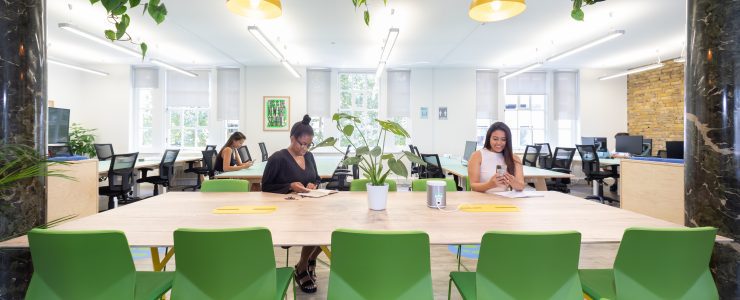
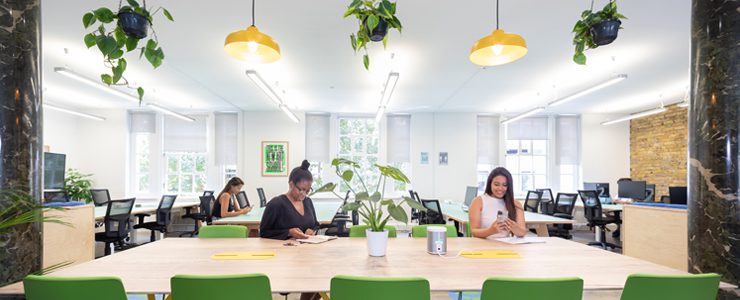

Green coworking: How shared spaces are going sustainable
Sustainability is no longer a “nice to have” in the workplace. As businesses across the UK look to reduce their environmental impact, green coworking has emerged as a powerful solution.
By sharing resources, reducing waste and designing smarter buildings, coworking spaces are proving that flexible work and sustainability can go hand in hand.
But what does green coworking really mean, and how are shared workspaces leading the shift towards a more sustainable future?
What Is green coworking?
Green coworking refers to shared workspaces designed and operated with sustainability at their core. This includes everything from energy-efficient buildings and responsible sourcing to waste reduction, wellbeing initiatives and long-term environmental strategies.
Unlike traditional offices, coworking spaces allow multiple businesses to share infrastructure, utilities and amenities. This inherently reduces duplication and overconsumption — making coworking one of the most environmentally efficient ways to work.
Why coworking Is naturally more sustainable
One of the biggest advantages of coworking is its shared-use model. Instead of each company running its own office with separate heating, lighting, printers and meeting rooms, coworking spaces centralise these resources.
Key sustainability benefits include:
- Lower energy consumption per person thanks to shared heating, cooling and lighting
- Reduced material waste, with communal furniture, kitchens and equipment
- Smarter space utilisation, minimising unused desks and empty offices
- Shorter commutes, as flexible locations allow people to work closer to home
In short, coworking spaces make better use of less — a fundamental principle of sustainability.
Energy-efficient buildings and smart technology
Many modern coworking operators are investing heavily in energy-efficient buildings. This often includes LED lighting, motion sensors, smart thermostats and upgraded insulation to reduce overall energy use.
Some spaces also source renewable energy or purchase green tariffs, helping businesses lower their Scope 2 emissions without any operational complexity. Smart building management systems allow operators to monitor energy usage in real time, identifying inefficiencies and optimising performance.
For members, this means working in a comfortable, high-quality environment while significantly reducing their carbon footprint.
Reducing waste through design and operations
Waste reduction is another major focus of green coworking. Shared spaces are increasingly moving towards zero-to-landfill policies, robust recycling systems and reduced single-use plastics.
Common initiatives include:
- Centralised recycling and composting
- Refillable water stations to eliminate bottled water
- Digital-first operations to reduce paper use
- Sustainable cleaning products and suppliers
Because these initiatives are implemented at scale, their impact is far greater than in a single-tenant office.
Sustainable fit-outs and furniture
The most forward-thinking coworking providers are also rethinking how spaces are built and furnished. Sustainable fit-outs often prioritise:
- Reused or refurbished furniture
- Low-VOC paints and materials
- Modular designs that can adapt as needs change
- Long-lasting, high-quality materials that reduce replacement cycles
This approach not only reduces environmental impact but also creates healthier, more pleasant places to work.
Supporting greener business practices
Green coworking doesn’t stop at the building itself. Many shared workspaces actively support members in becoming more sustainable businesses. This can include access to sustainability reporting tools, ESG-aligned services, or simply providing the infrastructure that allows companies to operate more responsibly from day one.
For start-ups and SMEs in particular, coworking offers a way to align with sustainability goals without the cost or complexity of managing a green office independently.
The future of sustainable workspaces
As demand for flexible work continues to grow, sustainability will play an increasingly central role in how coworking spaces are designed and operated. Businesses are under pressure from clients, investors and employees to demonstrate real environmental responsibility — and green coworking offers a practical, scalable solution.
By combining flexibility, community and sustainable design, shared workspaces are helping redefine what a modern, responsible office looks like.
Why green coworking makes sense
For businesses looking to reduce their environmental impact while maintaining professionalism and flexibility, green coworking is a clear choice. It delivers measurable sustainability benefits, supports employee wellbeing and aligns with the future of work.
As shared spaces continue to evolve, one thing is clear: the greenest office is often a shared one.